What the product does
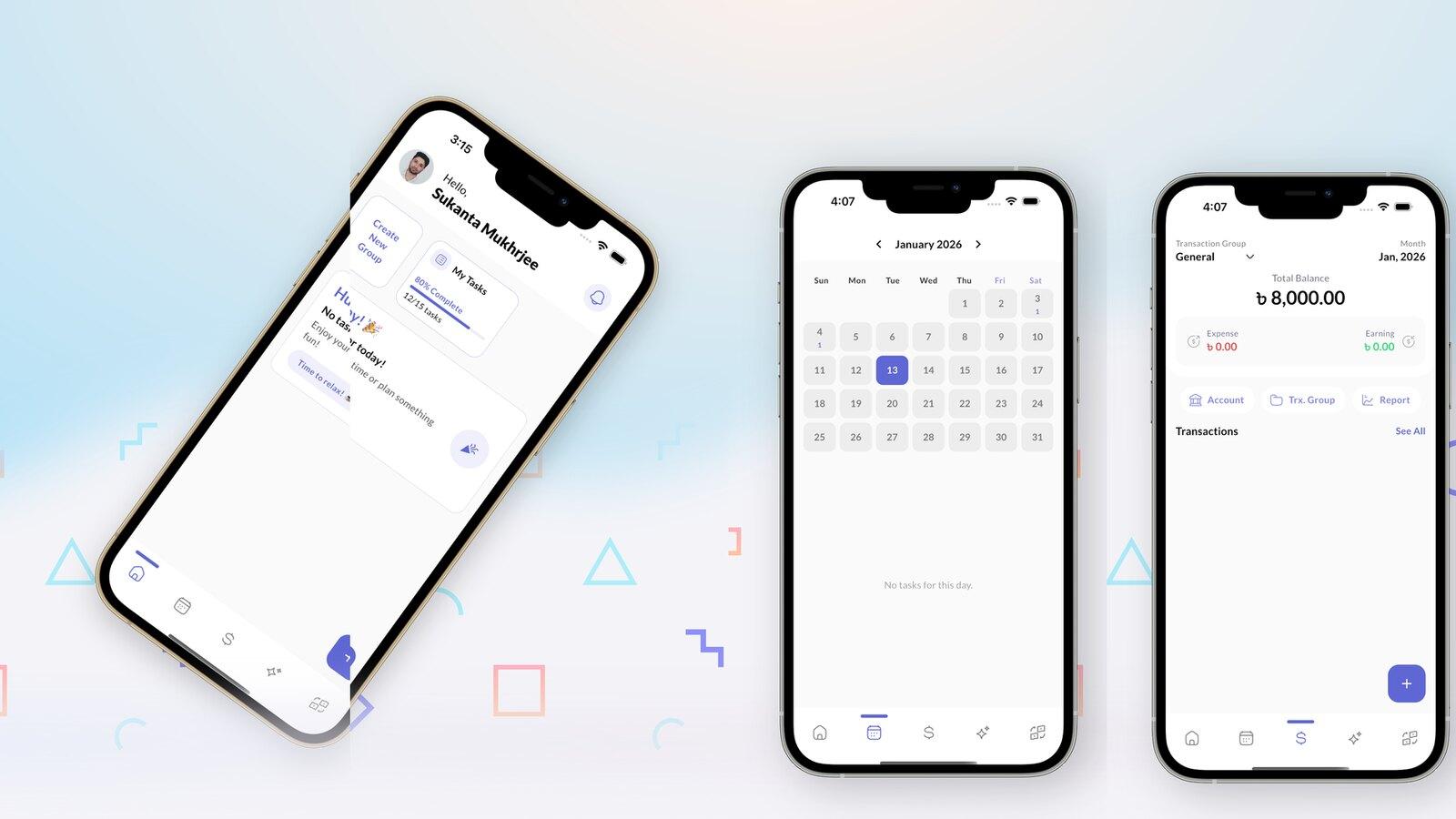
TaskMate keeps tasks and money in the same place. Users plan work, track what they spend, and ask an assistant to summarise where the week went, which is the part people actually come back for.
What I built
The entire product: the Flutter application on both stores, the Node.js backend, and the MongoDB schema underneath.
The assistant
The naive version of this feature is to dump a user's tasks into a prompt and hope. That breaks in two ways. It runs out of context the moment a user has a real history, and it gives the model the chance to invent a task that does not exist.
What I built instead, on Gemini Flash 2.5, treats the model as a caller rather than an oracle. It has a small set of tools: query tasks by range and status, query expenses by category and period, compute totals. When a user asks where their money went last month, the model decides which tool to call, the backend runs a real query, and the model gets numbers back that came from the database. Its job is turning that into a sentence, not remembering the data.
Context is assembled per request rather than accumulated forever: the current conversation window, a short rolling summary of what came before, and the user's identity for scoping every query. Cost and correctness improve for the same reason, which is not a coincidence.
What I would do differently
Define the tool schemas before writing a line of prompt. I did it the other way round first, and spent time tuning language to work around tools that were shaped wrong.
Going deeper
There is a full case study for this project: context, architecture, trade-offs and what I would change today.
Read the case study