Full stack · E-commerce
SkyCrew
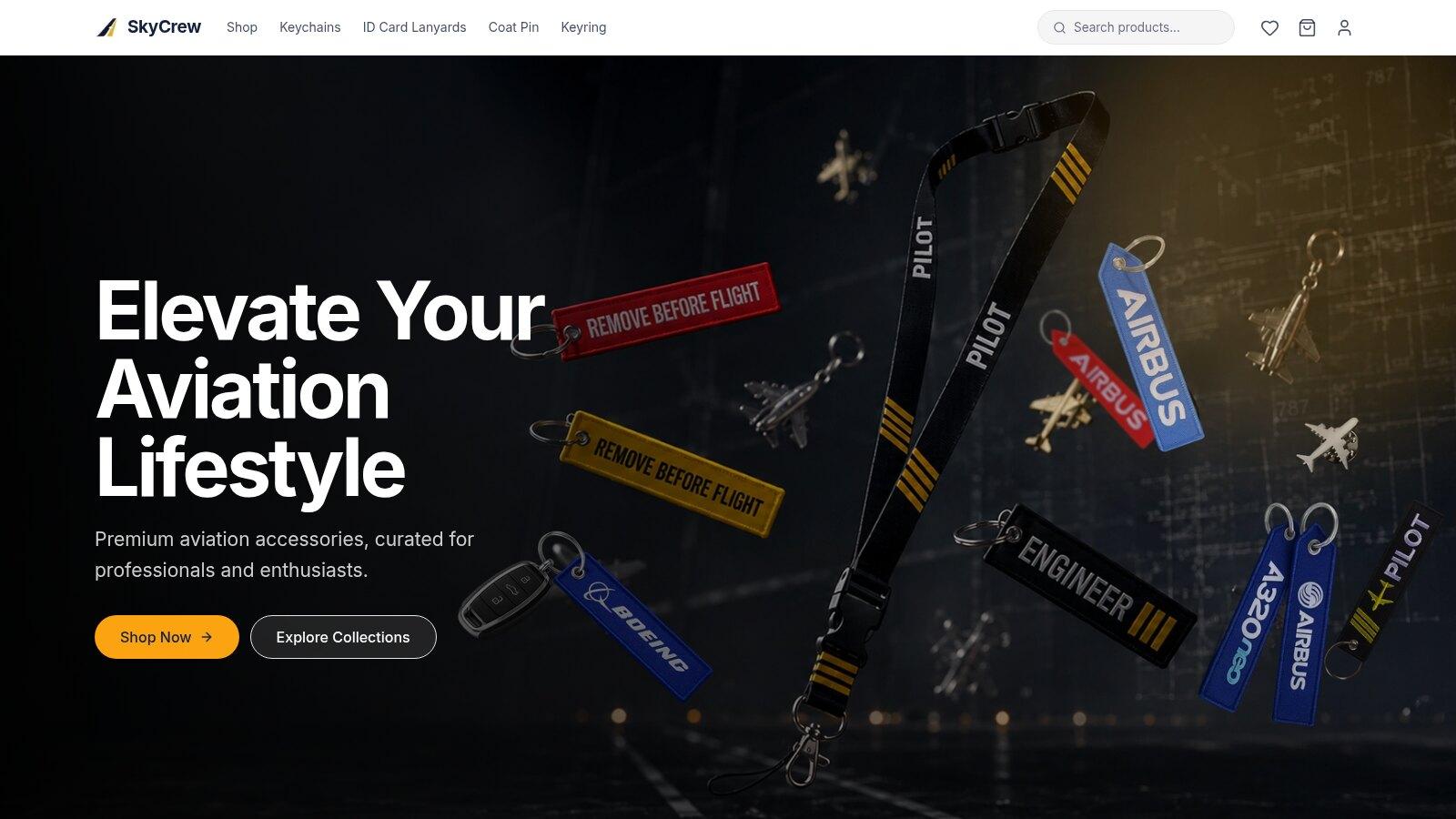
Premium aviation accessories brand for Bangladesh. Storefront, admin panel, API and database, designed and built end to end.
- Role
- Founder and engineer
- Timeline
- 2026
- Type
- Full stack · E-commerce
- Company
- Independent product
What the product does
SkyCrew sells aviation accessories to the people who work in aviation: pilots, cabin crew, engineers, ground staff and aviation students. High visibility vests, lanyards, keychains and aircraft models, organised by airline and aircraft rather than by generic product categories, because that is how the customers think about them.
It is a boutique brand, not a marketplace. There is one seller, inventory is held before orders are placed, and most traffic arrives from Facebook on a phone.
What I built
All of it.
- Customer storefront in Next.js. Mobile first, because the traffic is.
- Admin panel as a Next.js dashboard and a Flutter application, so the catalogue and orders can be managed from a laptop or from a phone.
- API in NestJS with Prisma over PostgreSQL. Modular by feature: auth, products, categories, collections, orders, coupons, reviews, shipping, homepage, settings.
- Integrations: SSLCommerz for payment, Steadfast for delivery, Cloudinary for media.
Decisions worth defending
Categories and collections are separate concepts. A category is where a product lives. A collection is a curated group for marketing, and the same product can sit in several. Without that split, every campaign turns into either duplicated products or a category tree nobody can navigate.
Out of stock products stay visible. Hiding them protects a metric and loses a customer. A product that shows as out of stock with a clear signal keeps the demand attached to the product, and that demand is the only honest input to a restock decision.
No guest checkout. It costs conversion and it is still right here. Cross border delivery in Bangladesh depends on a reachable phone number and a real address, and the support cost of an order you cannot trace back to an account outweighs the checkout friction.
Nothing hardcoded that a shop owner needs to change. Categories, collections, homepage sections, shipping rates and free shipping thresholds are all database driven. Adding a category is an admin action, not a deploy.
Going deeper
There is a full case study for this project: context, architecture, trade-offs and what I would change today.
Read the case study